



















Ernesto Oroza Workshop

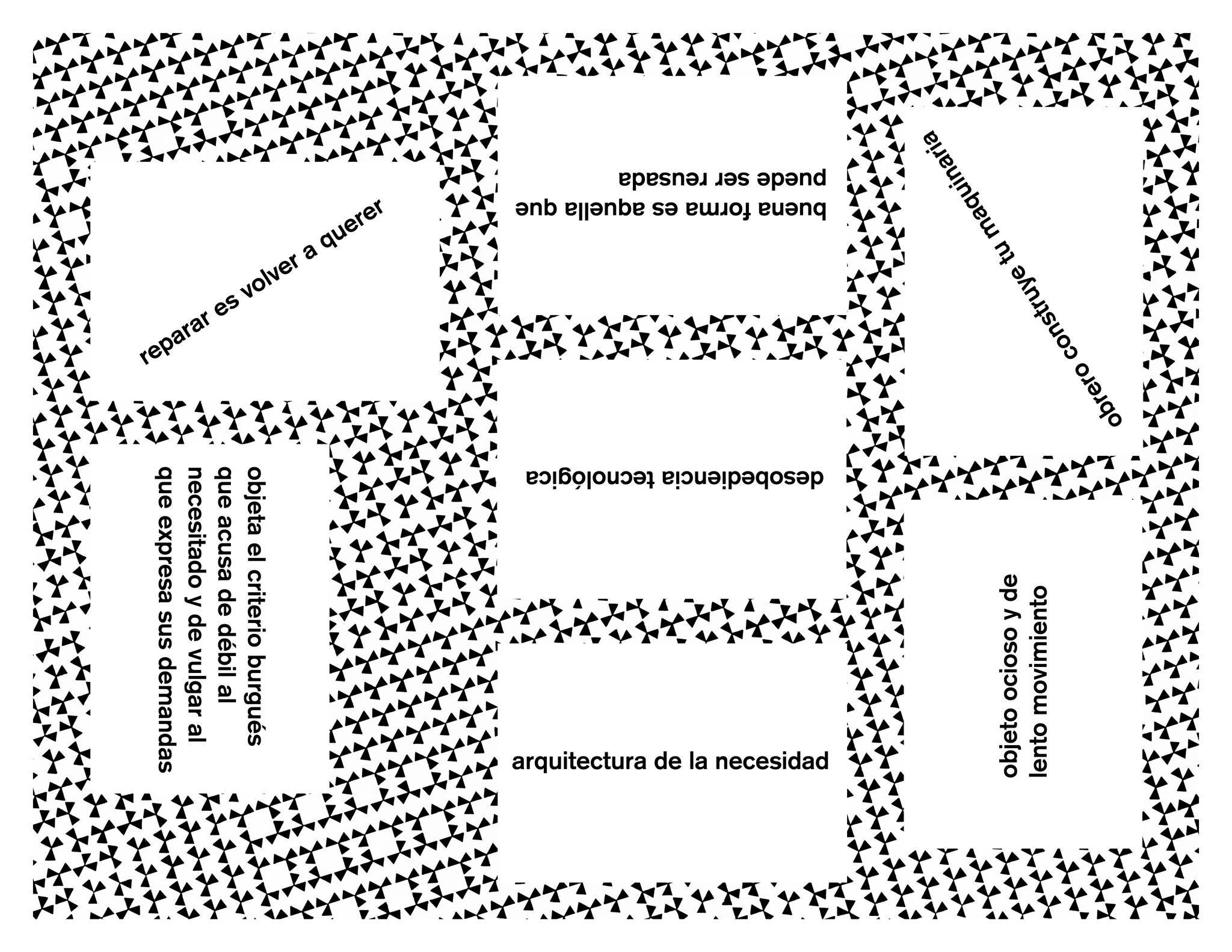
Technological Disobedience, Architecture of necessity, Moral Modulor, Moire house, Objects of Necessity, Generic matter, ...

  • Increase font size
  • Default font size
  • Decrease font size
Home
E-mail Print PDF

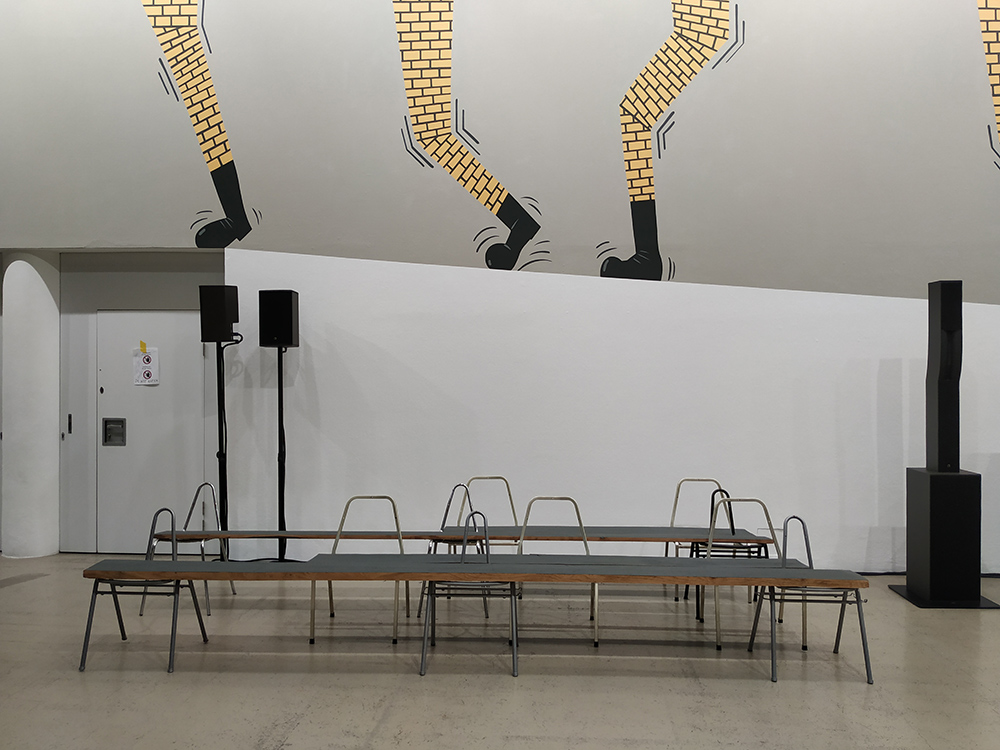
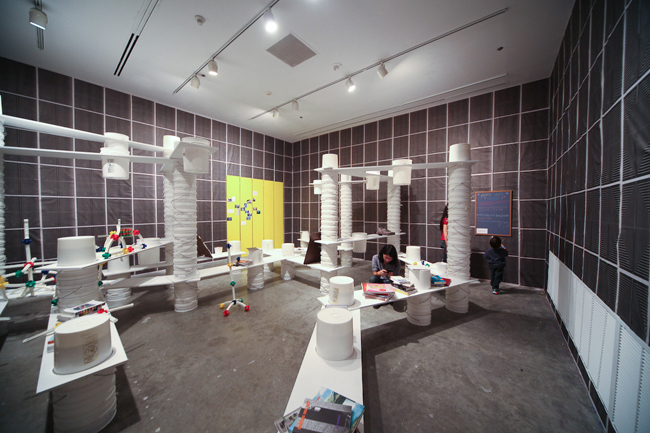
Reading Room @ Julius Caesar
3311 W. Carroll Ave. Chicago, IL 60626
organized by Sean Ward
http://juliuscaesarchicago.org/reading.html

 
E-mail Print PDF


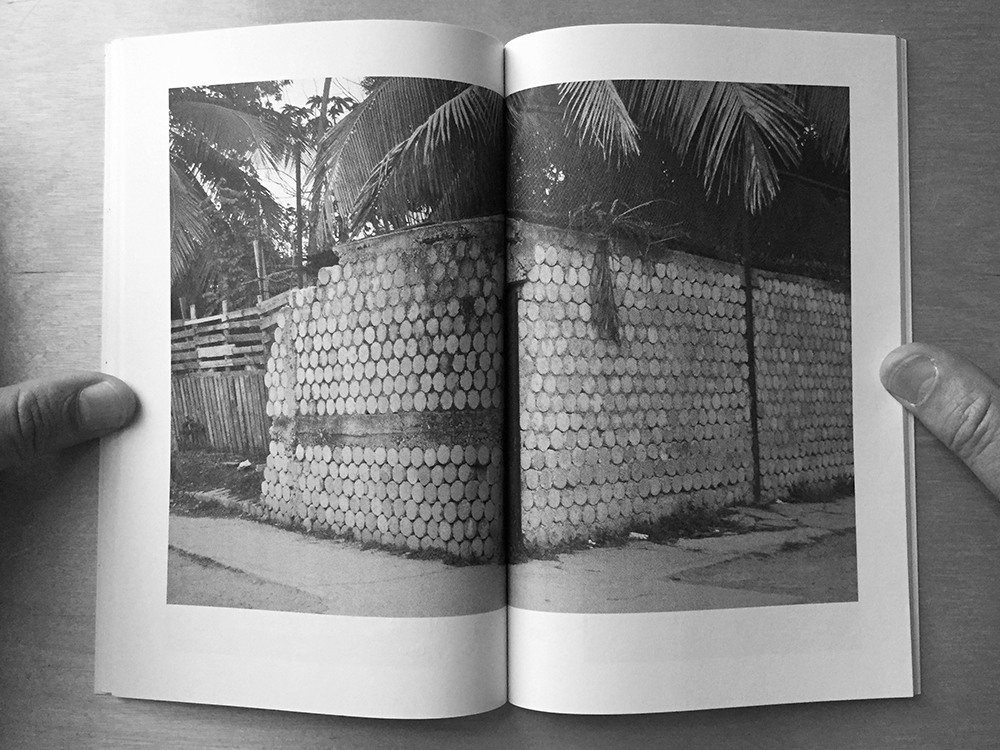
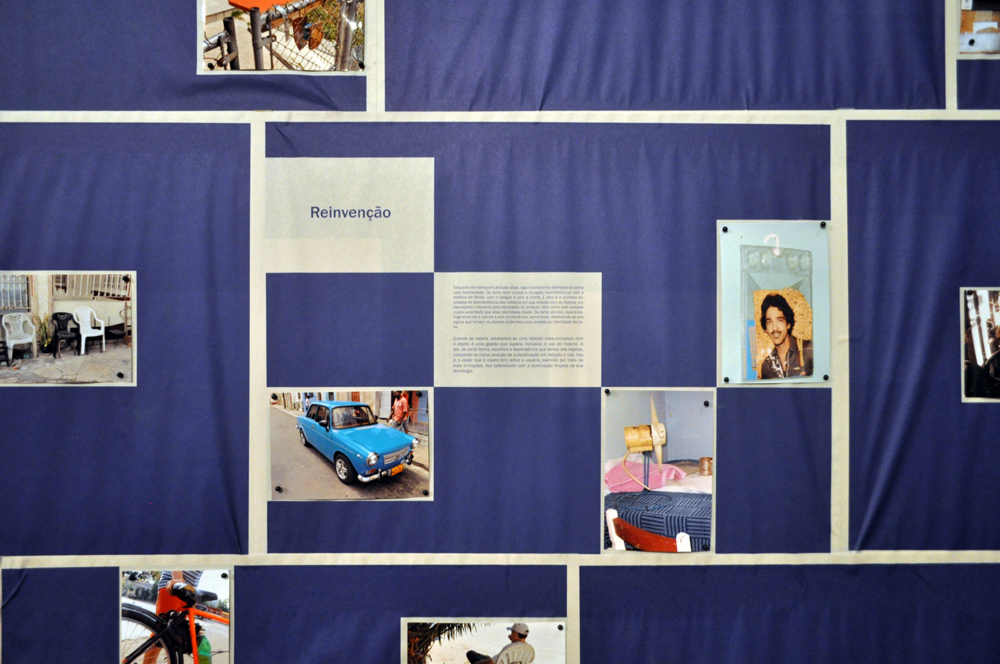
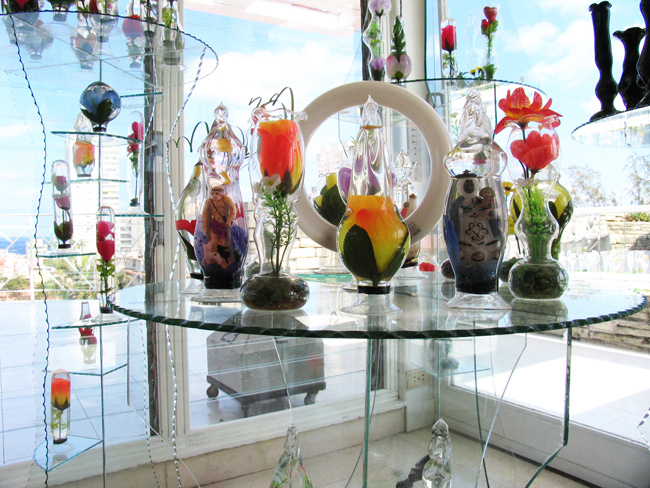
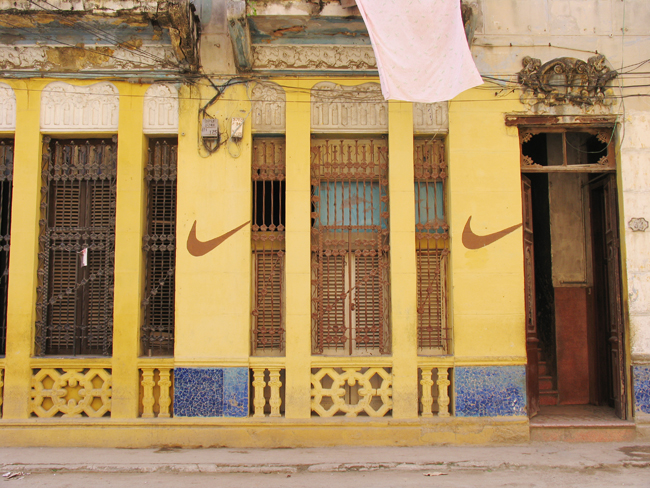
Nas bancas> Miami e Havana: em busca do “Para-ISO”

Utopias do progresso e constrangimento à criatividade são comuns às duas cidades

Texto e fotos exclusivas de Ernesto Oroza para a seção Territórios da Revista Select
http://www.select.art.br/article/editorial/o-havai-seja-aqui

 
E-mail Print PDF

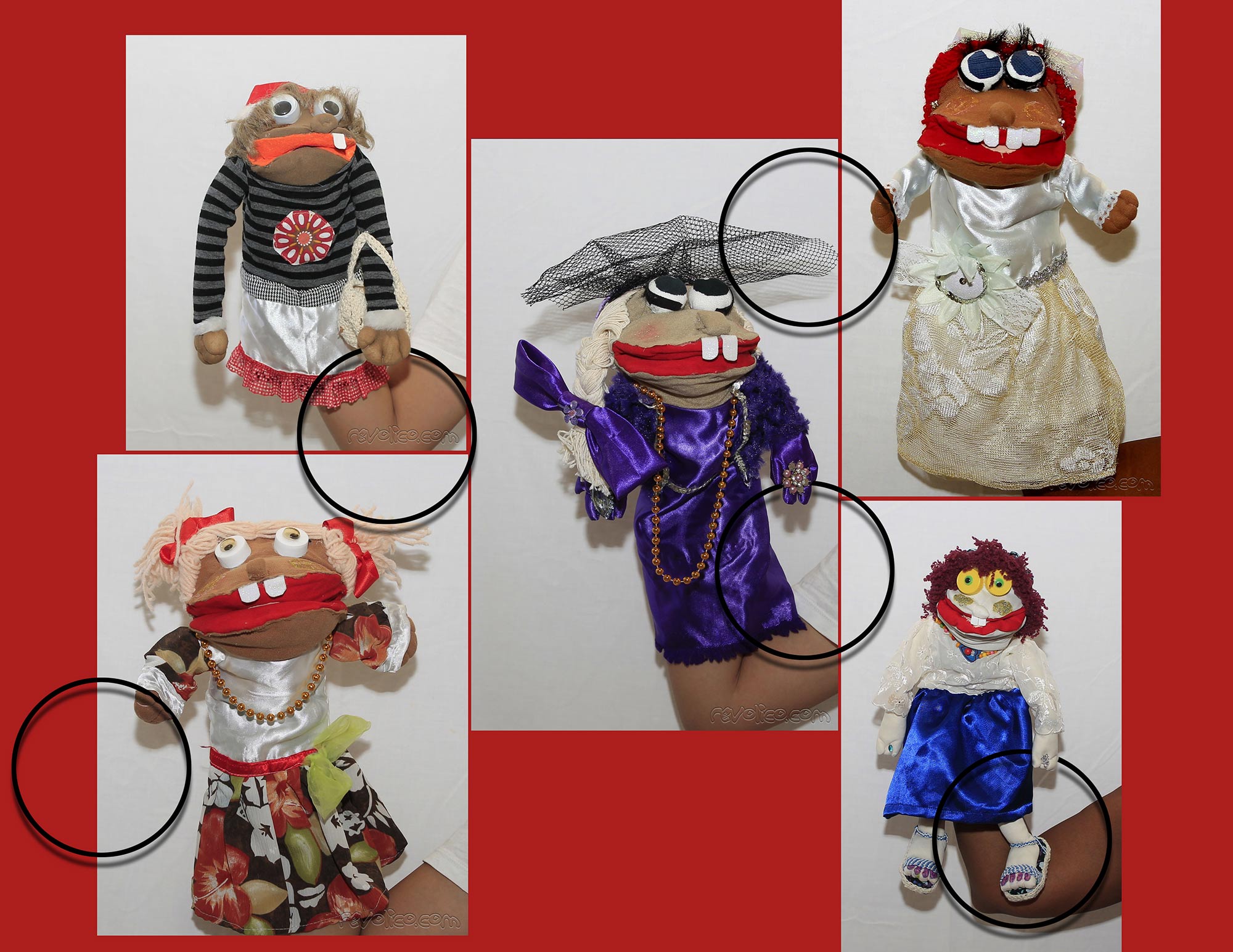
DOMESTIC ANIMAL GHOSTS

Curated by Gean Moreno

 
E-mail Print PDF

 
E-mail Print PDF

FREE ENTRANCE

Grand Hornu (Belgique) le 22 et 23 mars 2013 de 11 :00 à 19 :00.

En mars 2013, DESIGN, POVERTY, FICTION célèbre le 40e anniversaire du premier choc pétrolier (mars 1973), qui marque l’entrée des pays occidentaux en crise permanente. Pour le moment, rien n’indique une rémission. Il est donc essentiel d’imaginer la pauvreté autrement, soit pour s’en accommoder, par manque d’alternatives, soit pour en faire un lieu d’expériences.

DESIGN, POVERTY, FICTION questionne le rapport ambigu qu’entretient le design avec la pauvreté.

Read more...
 
E-mail Print PDF

Flash Théorie : "Autoproduction"

http://esad-reims.fr/blog/category/2.html
Mardi 12 mars 2013, de 9h30 à 13h - Médiathèque Falala, Reims • L'ESAD reprend le fil conducteur de sa recherche en Design : l'autoproduction. Avec une affiche d'invités particulièrement prestigieuse et internationale.

Qu'est-ce que l'Auto-production ?
Mettant en cause des modèles de développement, de consommation et de représentation de l'industrie à grande échelle, de plus en plus de designers choisissent - ou sont contraints - de se (ré)approprier le territoire de la production. Diverses et variées, leurs démarches vont du design d'édition à l'autoproduction assistée par ordinateur (fab lab), en passant par des unités de production semi-artisanales, et se posent comme des systèmes d'adaptation à la crise économique et industrielle de ces dernières années aussi bien que comme prises de positions éthiques, esthétiques et politiques. L'autoproduction y devient un modèle, que l'ESAD défend à travers une théorie, un système et un modèle éducatif.

Initié lors des 2èmes Rencontres Internationales de l'Art et du Design (24 octobre 2011),  cette recherche  s'inscrit désormais dans un vaste projet européen portant sur la notion d'Innovation Sociale intitulé Design and Social Innovation : Political Economy of the Commons (SIDESIGN ) qui  regroupe onze institutions internationales.

Read more...
 
E-mail Print PDF

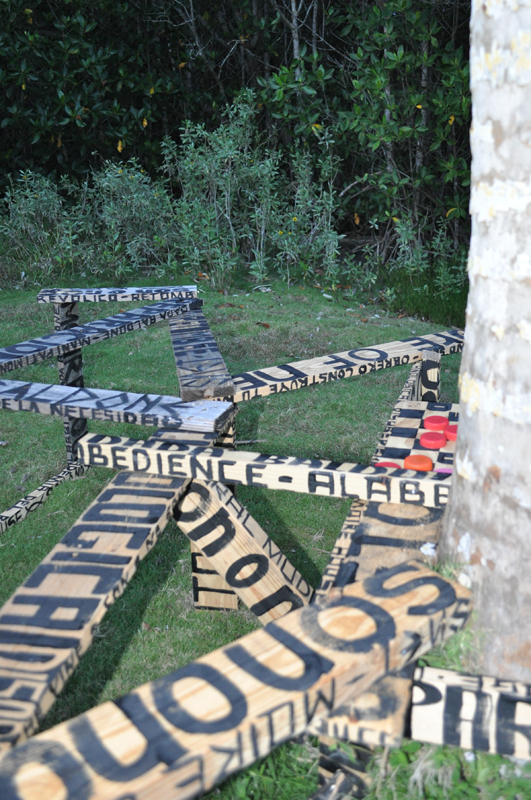
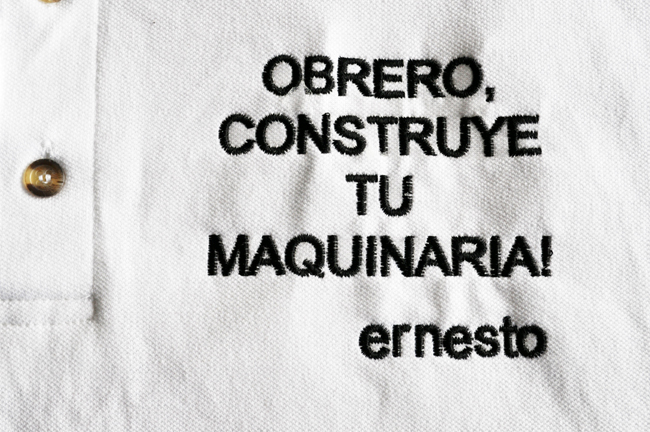
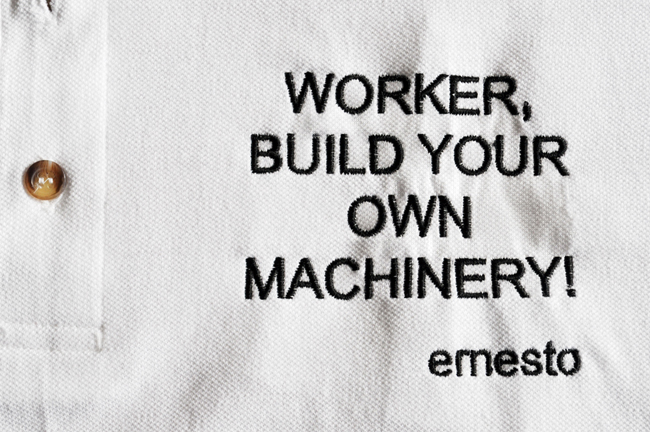
WORKER, BUILD YOUR OWN MACHINERY!
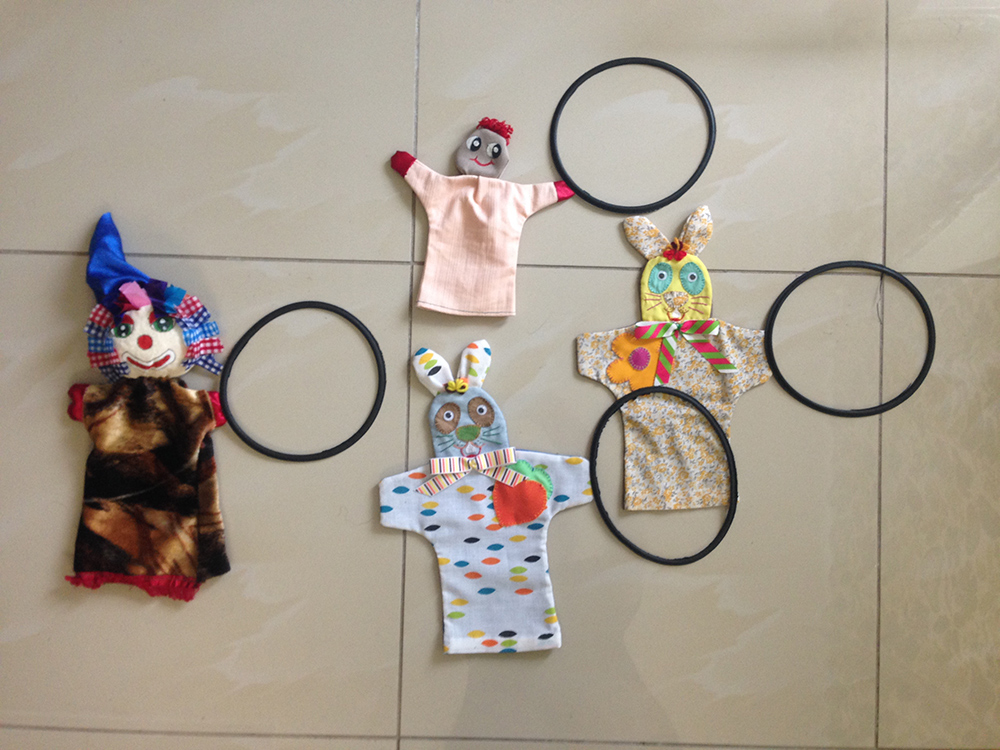
Ernesto Oroza's workshop and lecture. 13, 14 and 15 March, 2013
EPCC – ÉCOLE SUPÉRIEURE DES BEAUX-ARTS TOURS ANGERS LE MANS


E-mail Print PDF

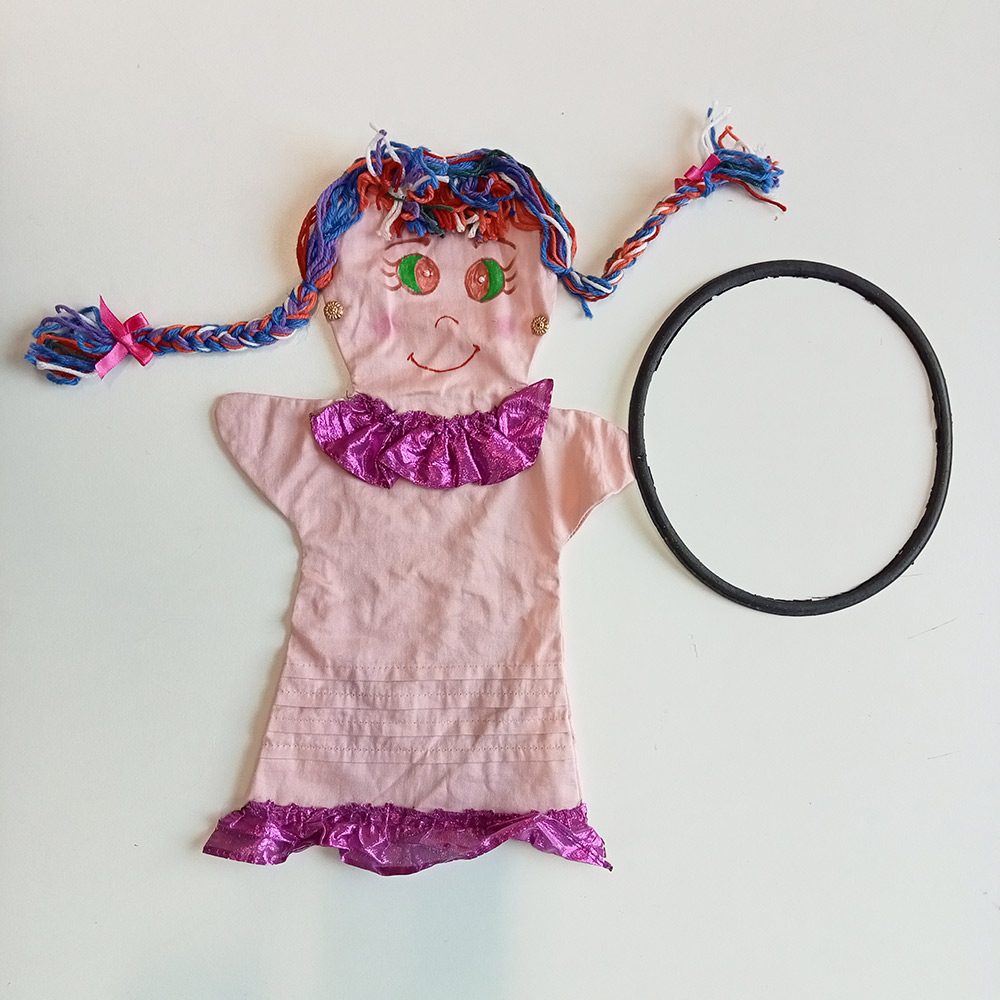
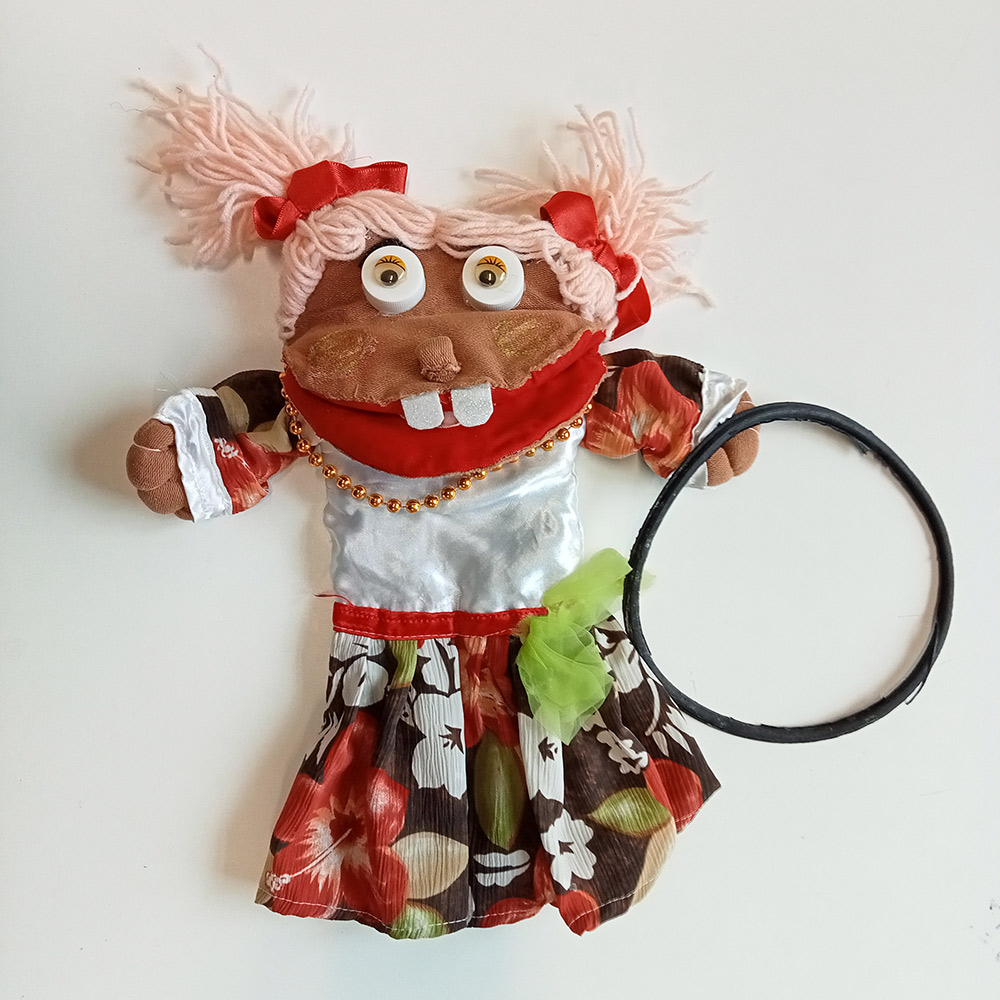
Les androïdes rêvent-ils de cochons électriques ?
Curator: Marie-Haude Caraës
Scenography: Adrien Rovero


photo Sonia Barcet


Cité du design - Bâtiments H

In 1976, in the story, Do androids dream of electric sheep?, Philip K. Dick prefigured a post-nuclear society where the few remaining animals on earth are supplanted by mechanical doubles created by man. It is impossible not to draw a comparison between K. Dick's story and our own. For the author, man will come to the cruel conclusion that after having destroyed the animals, he can't live without them.

K. Dick's electric sheep have a direct filiation with Vaucauson's mechanical duck, in 1739, which pretended to digest food. At the dawn of the 21st century, Sony has put together Aibo, a robot pet dog, which doesn't always obey its master's orders. In 2012, Robojelly roams about in the sea like a jelly fish to track down tankers which are illegally emptying their tanks. Will these artificial entities change the rapport between man and animals?

Over the course of history, the utility roles attributed to animals - hunting, agriculture, mobility - have been gradually taken over by technical solutions. Animals continue to be exploited for their meat, skin, fur, their organs, but at the same time they are absent from our lives. At a time when we are criticizing industrial systems, the relations between man and animals are being reconsidered. By means of a selection of artifacts, the "Androids" exhibition leads the visitor to reflect on his rapport with animals.

 
E-mail Print PDF

Alejandra von Hartz Gallery 2630 NW 2nd. Avenue Miami, FL 33127, USA Wynwood Art District


Research image

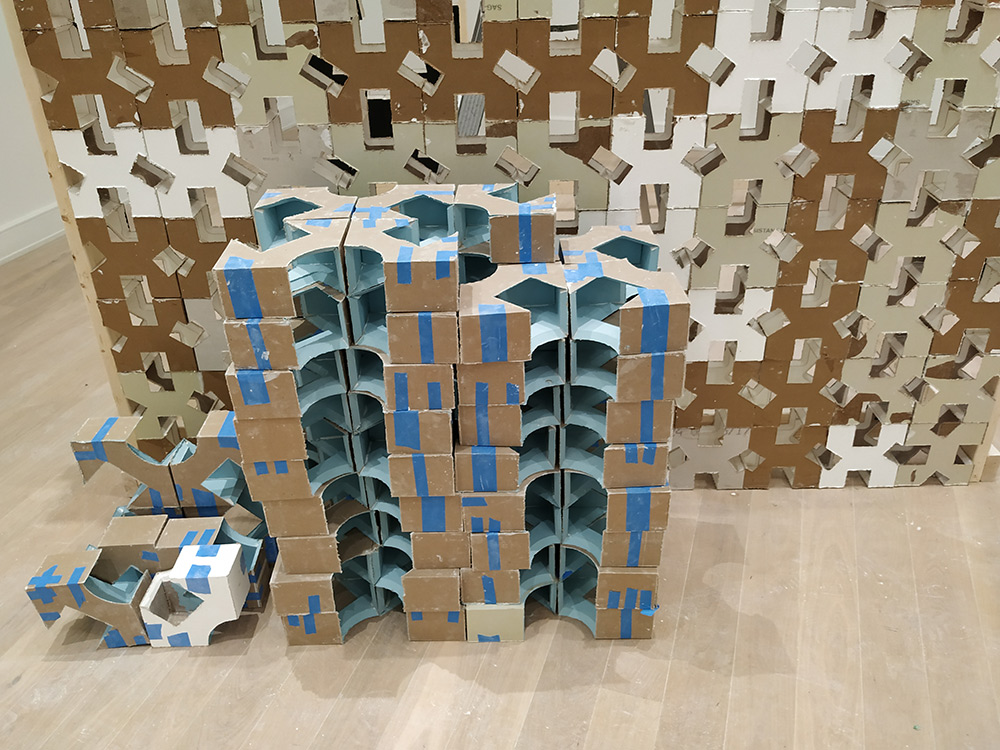
Gean Moreno and Ernesto Oroza: Drywood
February 7 – March 28, 2013
Opening Reception: Thursday, February 7, 2013, from 7 to 10pm
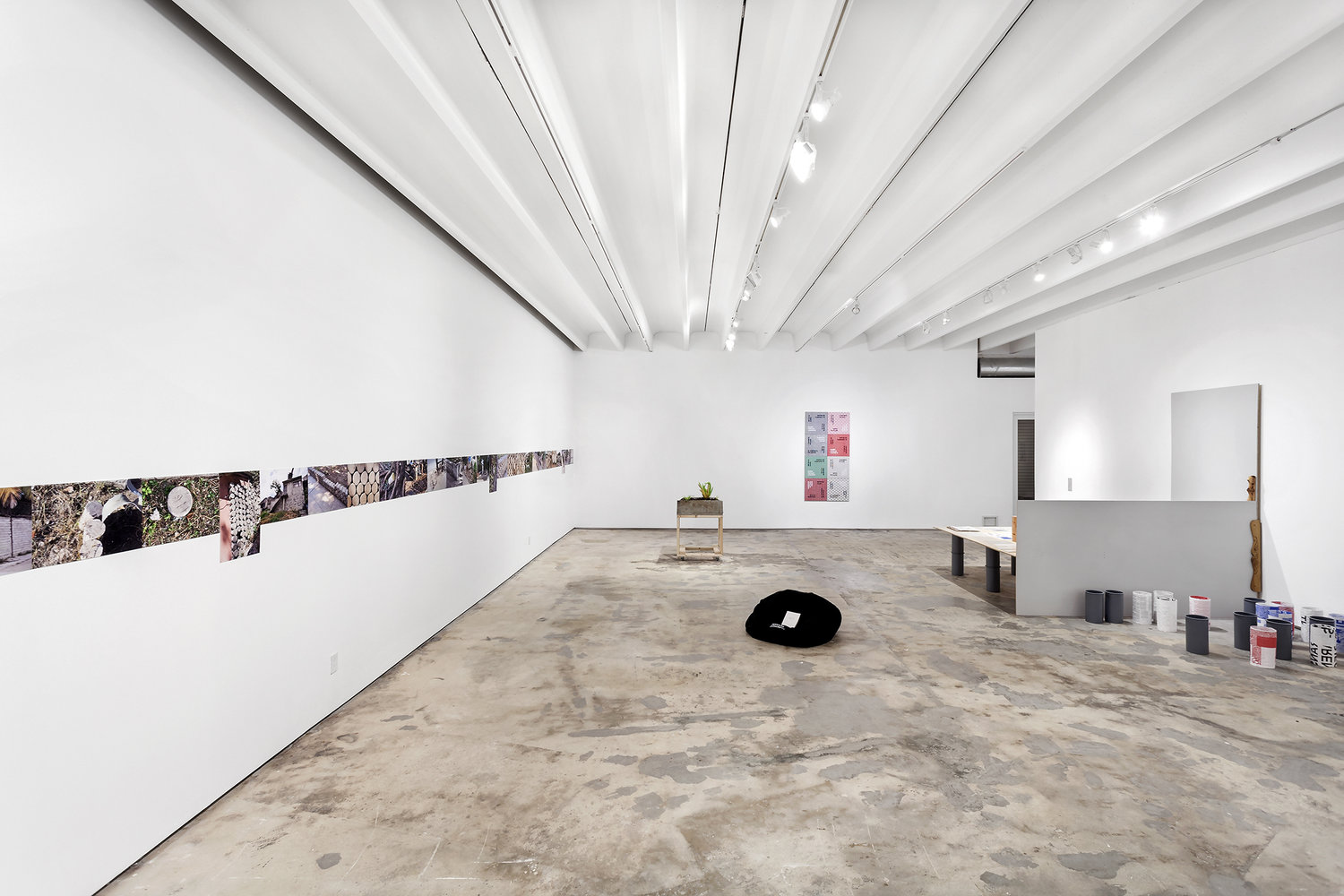
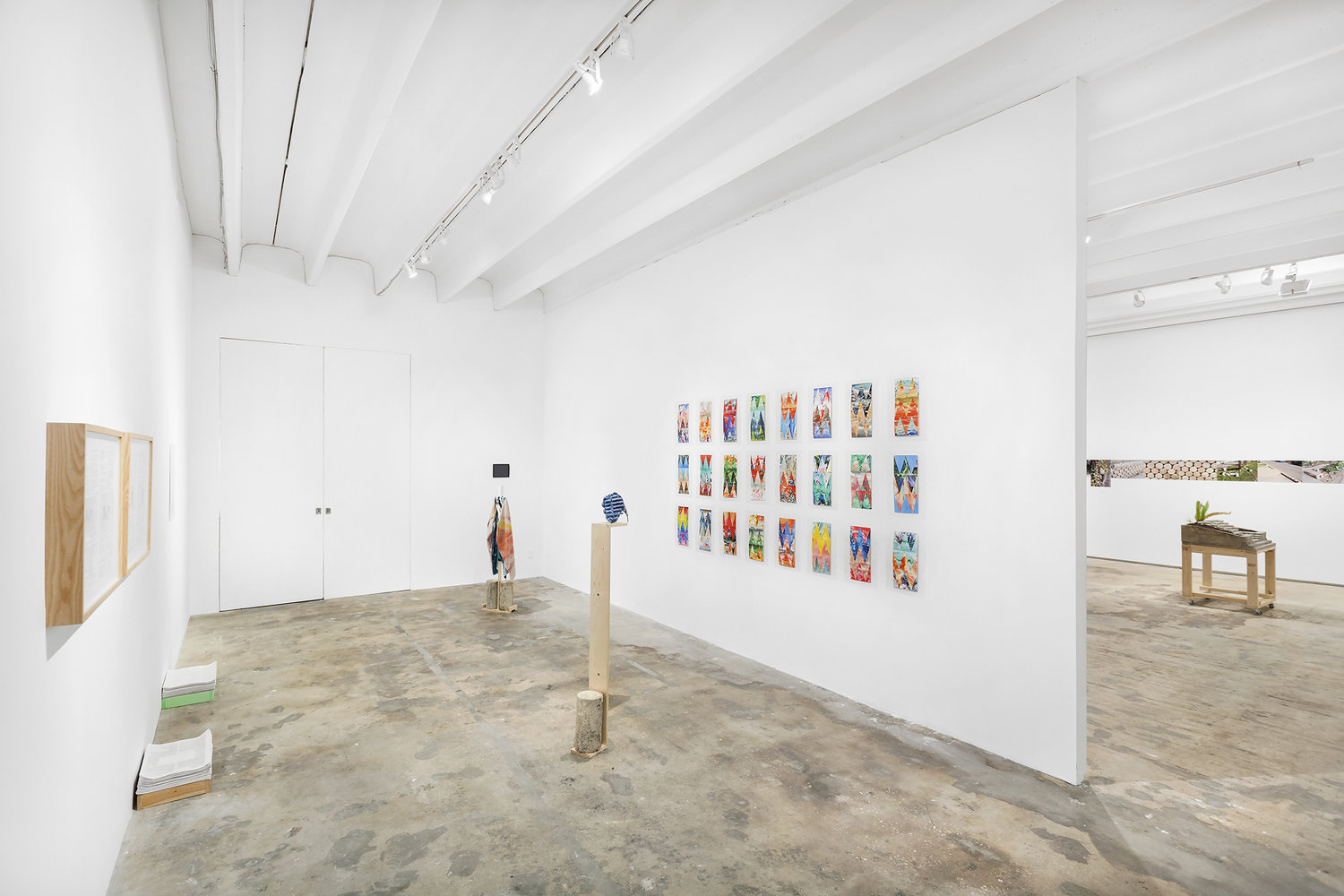
Alejandra von Hartz Gallery is pleased to present “Drywood,” a solo exhibition of collaborative works by Gean Moreno and Ernesto Oroza. The show runs from February 7 to March 28, 2013. An opening reception will take place on Thursday, February 7th, from 7 to 10pm.
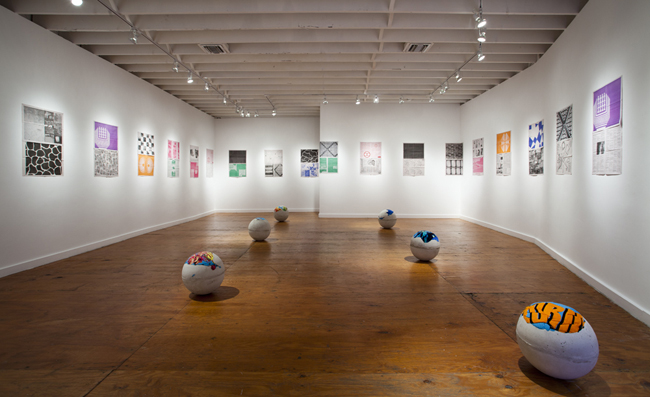
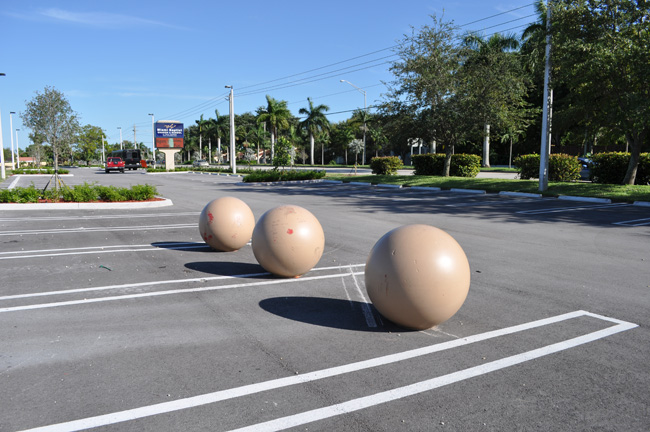
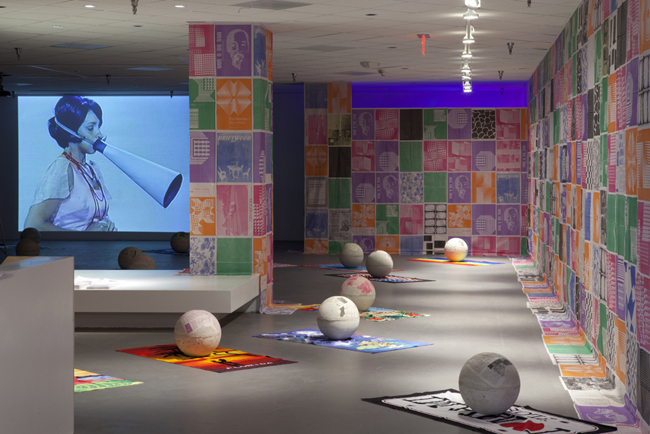
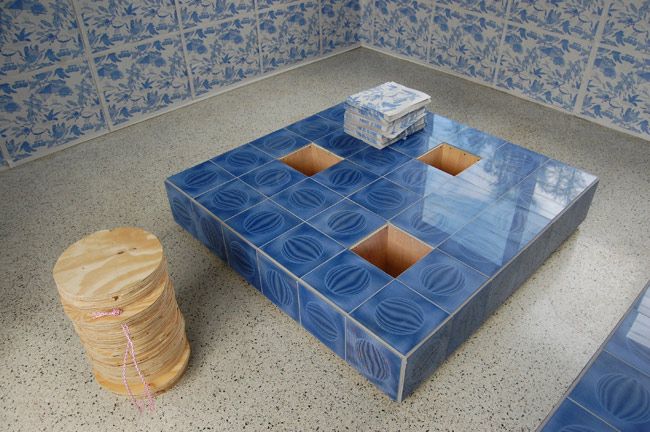
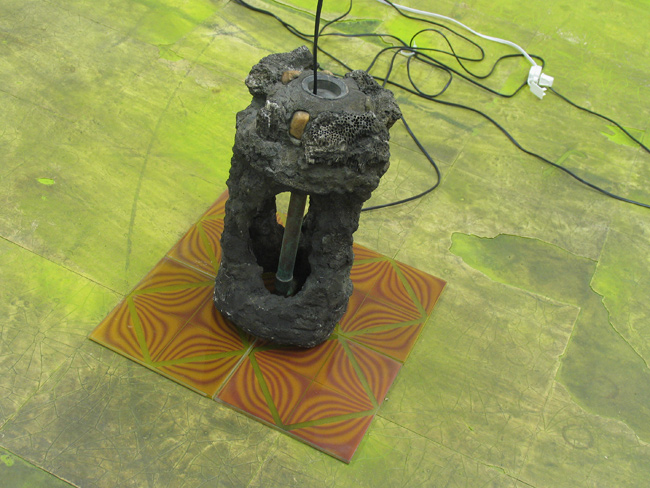
As they have done in their previous research-driven projects, Moreno and Oroza begin by zeroing in on contemporary variations of an object typology -- in this case, they began with the souvenir -- in an effort to understand how it functions in relation to forces of contemporary production, the generation of urban morphology and identity, and the changing terrain of user engagement. With this new project, they seek to understand how generic production, embodied in the souvenir, stands as both the ultimate horizon of rationalization in object design and a generative force that increasingly determines our urban environments. At Alejandra von Hartz Gallery, Moreno and Oroza will present a series of concrete spheres which, during the casting process, swallowed souvenir objects. These are an effort to mesh two objects that are distributed throughout the city: the generic spheres that serve as obstacles and place-markers and artifacts that serve to develop identity narratives for the city. The layout of the spheres and the quantity employed has been determined by the wooden sheets (modules) that make up the gallery’s floor.
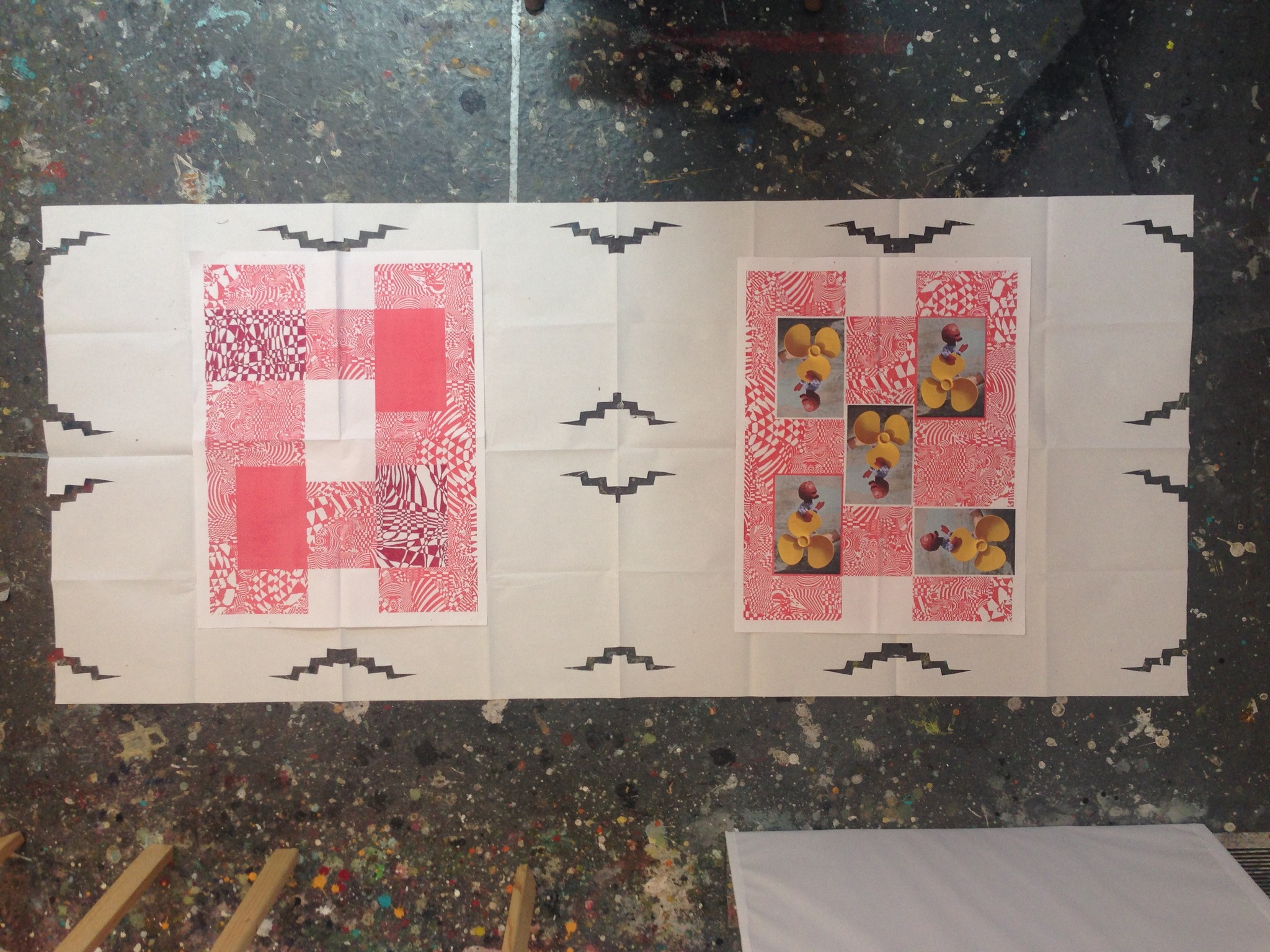
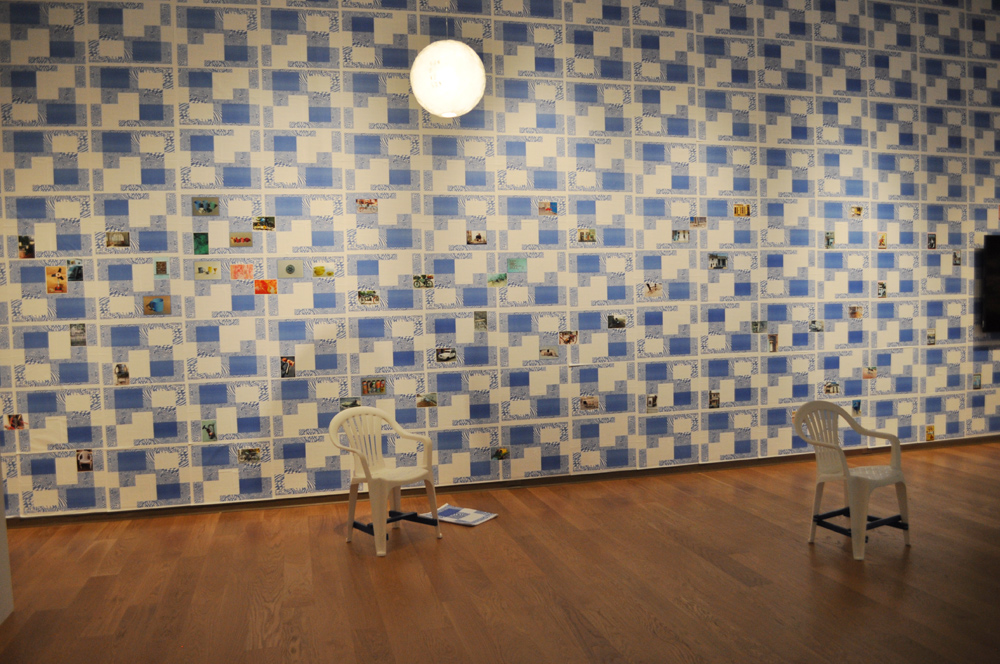
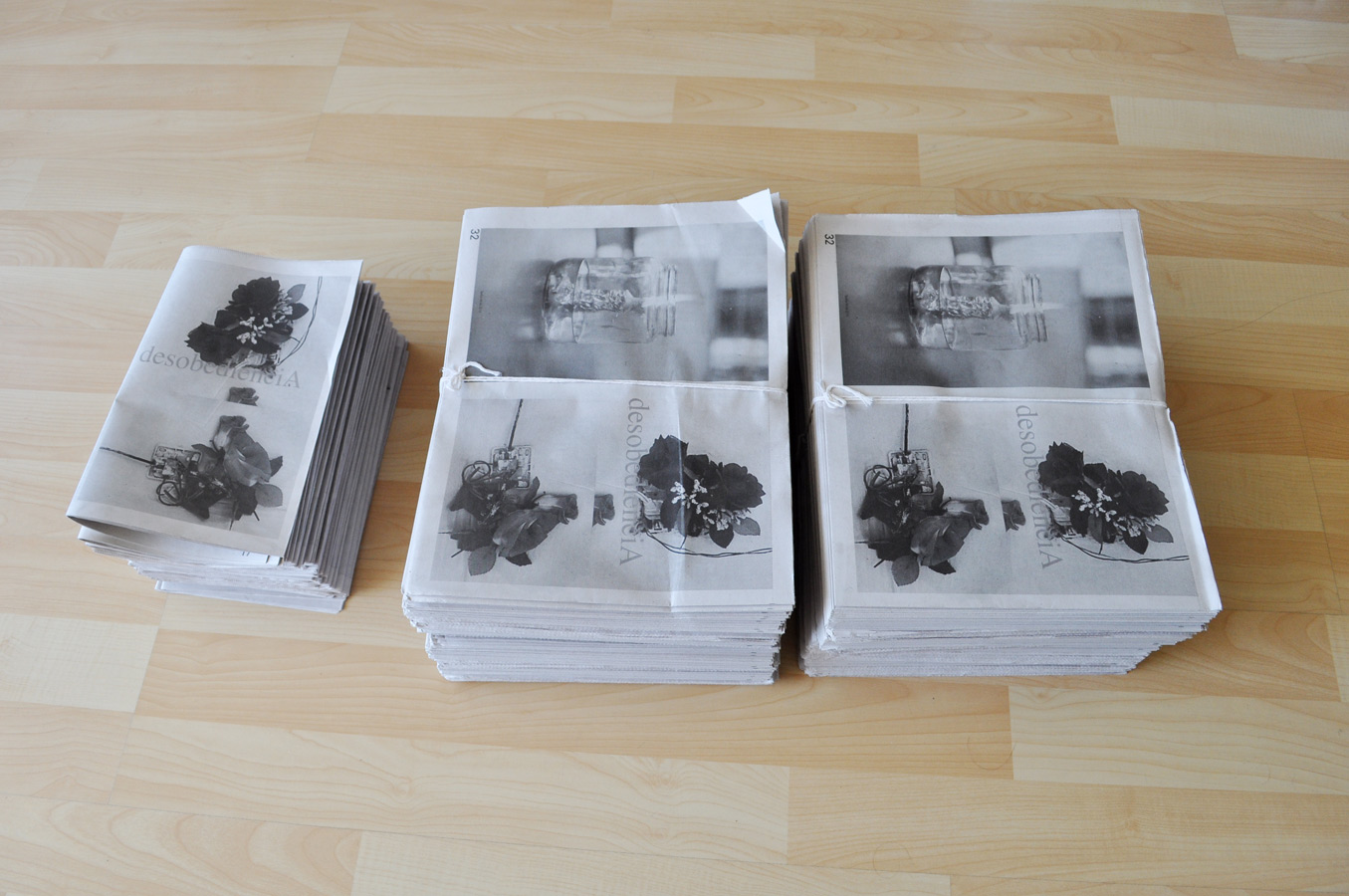
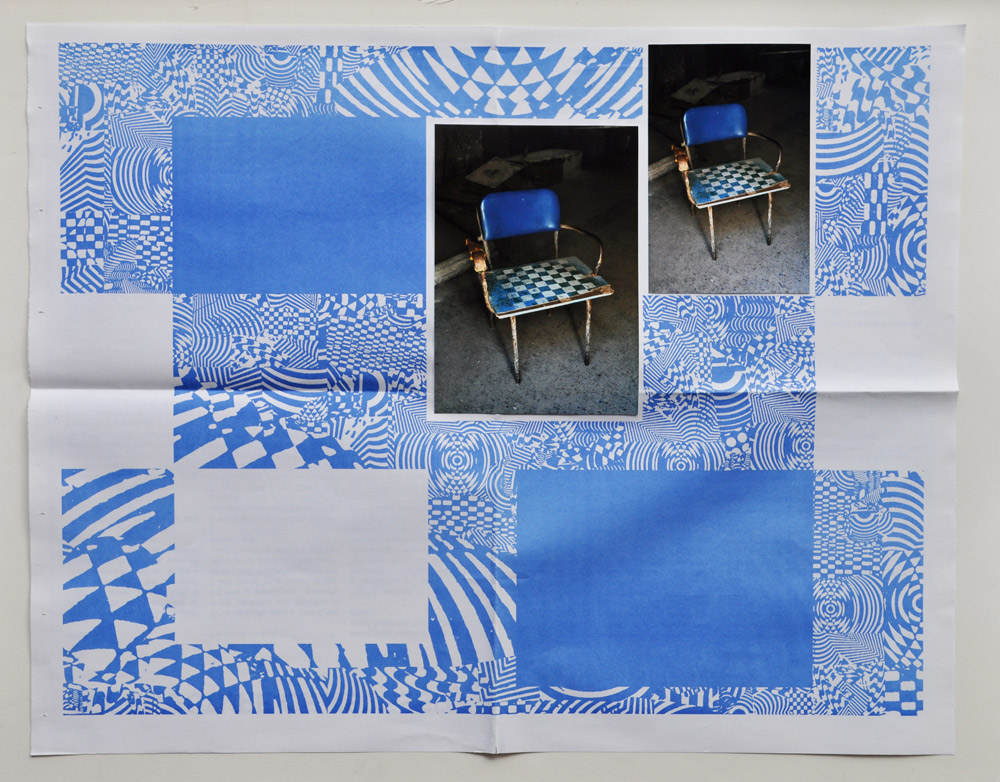
Along with the spheres, Moreno and Oroza will present a series of compositions, assembled by others, that employ pages from the Tabloid (www.thetabloid.org) that they have been producing over the last four years. The display of these compositions will be determined by the metric constraints of the standard tabloid. The Tabloid has served as a repository for their research and texts, a documentary vehicle, and a space to enlarge the discursive space of their practice and the exhibitions in which they participate. Hans Ulrich Obrist, Joe Scanlan, Yona Friedman, Hito Steyerl, and Peter Lang, among a number of other theorists and cultural producers, have contributed to the Tabloid. Moreno and Oroza will also present a bootleg copy of Glauber Rocha’s film Cancer and zines filled with pirated essays by Argentinean designer-painter-theorist Tomas Maldonado and Brazilian filmmaker Glauber Rocha.
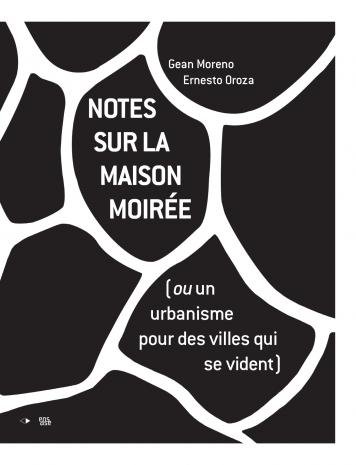
Later this spring, in conjunction with the Biennale Internationale Design Saint-Etienne 2013, Publications de l’Université de Saint-Étienne, 2013, Cité du design, in St. Etienne, France, will publish Moreno and Oroza’s first collaborative book Maison Moiré.
Gean Moreno’s cultural production is activated through individual and collaborative art practices, curation, writing and publishing. This activity extends to murkier projects that include a secretive semi-anonymous online science fiction novel that doubles as a post-apocalyptic virtual art gallery. Moreno’s individual artwork has been presented at Institute of Visual Arts, Milwaukee, Museum of Contemporary Art, Miami; Center of Contemporary Art, Glasgow; Derek Eller, NY; and Arndt and Partner, Berlin. The curatorial element of his production explores various species of this form of selective organization and presentation. Amongst these projects are Conditions of Display at the now defunct The Moore Space; On Platforming at Locust Projects, Miami; and Do not Torture the Rotten Ducklings at the Institute of Visual Art (INOVA) Milwaukee. He has produced a range of texts -- from speculative urban studies to interviews with Peter Friedl and political theorist Michael Hardt. Moreno’s writings have been included in the catalogues for the exhibitions Uncertain States of America! (Astrup Fearnley Museum, Oslo), Round-Leather Worlds (Martin Gropius-Bau, Berlin), and Iñigo Manglano-Ovalle (Soledad Lorenzo, Madrid), among others. He is currently contributing editor of Art Papers magazine, sits on the editorial board of ArtUS, and has published in e-flux journal, Flash Art, and Art Nexus. In 2008 he founded [NAME] Publications.
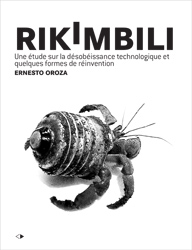
Ernesto Oroza’s practice channels the tradition of Radical Architecture into his own analytical employment of contemporary object typologies and productive forces. In lieu of functioning within the realm of manufacturing, he produces and distributes speculative models and research through various publication methods, exhibitions, collaborative practices, documentaries, and unorthodox forays into more conventional modes of architecture, interior and object design. Oroza’s individual work has been presented at the Museum of Modern Art, New York; Groninger Museum, The Netherlands; LABoral Centro de Arte y Creación Industrial, Spain; Montreal Museum of Fine Arts; Museo Rufino Tamayo, Mexico City; Institut de Cultura La Virreina, Barcelona. He has participated twice in the Saint-Etienne International Design Biennial, Saint-Etienne, France. Oroza has been awarded fellowships by Guggenheim Foundation; Christoph Merian Foundation, Basel, Switzerland; Danish Center for Cultural Development; and Ludwig Foundation. He was Professor at Polytechnic Institute of Design, Havana, and is a recurrent Visiting Professor at Les Ateliers, Ecole Nationale Supérieur de Création Industrielle (ENSCI) in Paris. He has also lectured and developed workshops for various international institutions, most recently the BMW Guggenheim Lab in Berlin. Among his books are: RIKIMBILI: Une étude sur la désobéissance technologique et quelques formes de réinvention (Publications de l’Université de Saint-Étienne, France); NO WASTE (London Pentagram Design, 2003); Editing Havana: Stories of Popular Housing (Aristo Bogforlag, 2011); and (with Penelope de Bozzi) Objets Réinventé. La création populaire a Cuba (Ëditions Alternatives, 2002). He is co-editor of the Objects Aside series for [NAME] Publications. He has also published writings in e-flux Journal and Monu--A Magazine for Urbanism.
For more information, please contact the gallery at This e-mail address is being protected from spambots. You need JavaScript enabled to view it or call 305.438.0220. Please, visit our website at www.alejandravonhartz.net
Alejandra von Hartz Gallery
2630 NW 2nd. Avenue

Gean Moreno and Ernesto Oroza: Drywood

February 7 – March 28, 2013

Opening Reception: Thursday, February 7, 2013, from 7 to 10pm

Alejandra von Hartz Gallery is pleased to present “Drywood,” a solo exhibition of collaborative works by Gean Moreno and Ernesto Oroza. The show runs from February 7 to March 28, 2013. An opening reception will take place on Thursday, February 7th, from 7 to 10pm.

As they have done in their previous research-driven projects, Moreno and Oroza begin by zeroing in on contemporary variations of an object typology -- in this case, they began with the souvenir -- in an effort to understand how it functions in relation to forces of contemporary production, the generation of urban morphology and identity, and the changing terrain of user engagement. With this new project, they seek to understand how generic production, embodied in the souvenir, stands as both the ultimate horizon of rationalization in object design and a generative force that increasingly determines our urban environments. At Alejandra von Hartz Gallery, Moreno and Oroza will present a series of concrete spheres which, during the casting process, swallowed souvenir objects. These are an effort to mesh two objects that are distributed throughout the city: the generic spheres that serve as obstacles and place-markers and artifacts that serve to develop identity narratives for the city. The layout of the spheres and the quantity employed has been determined by the wooden sheets (modules) that make up the gallery’s floor.

Read more...
 
E-mail Print PDF

8687 melrose avenue, suite b275, west hollywood, ca 90069 | 310.903.9566 | wharton-espinosa.com

gean moreno + ernesto oroza: orange tsunami

Wharton + Espinosa is pleased to present “Orange Tsunami,” the first West Coast solo exhibition of collaborative works by Miami-based artists Gean Moreno and Ernesto Oroza. With an opening reception on January 17 from 5:30-8:30PM, the show runs through March 8, 2013. As part of "Orange Tsunami," Moreno and Oroza have published Tabloid #23 (download the PDF here).

What would happen if all the shops in a tourist location would begin to be invaded by an abstract souvenir that everyone recognized as a malefic mass? Or what would happen if someone attempted to produce a souvenir that sought less to draw an emotional link to a private experience than to liberate the forces of sidetracked emancipatory projects? What would happen if a devastating invasive species leapt into the field of souvenir production and became a sign of the place it is devastating? – GM + EO


Read more...
 
E-mail Print PDF

Gean Moreno and Ernesto Oroza featured in new Laurence King "Architectural Inventions" book


Architectural Inventions: Visionary Drawings
By Matt Bua and Maximillian Goldfarb

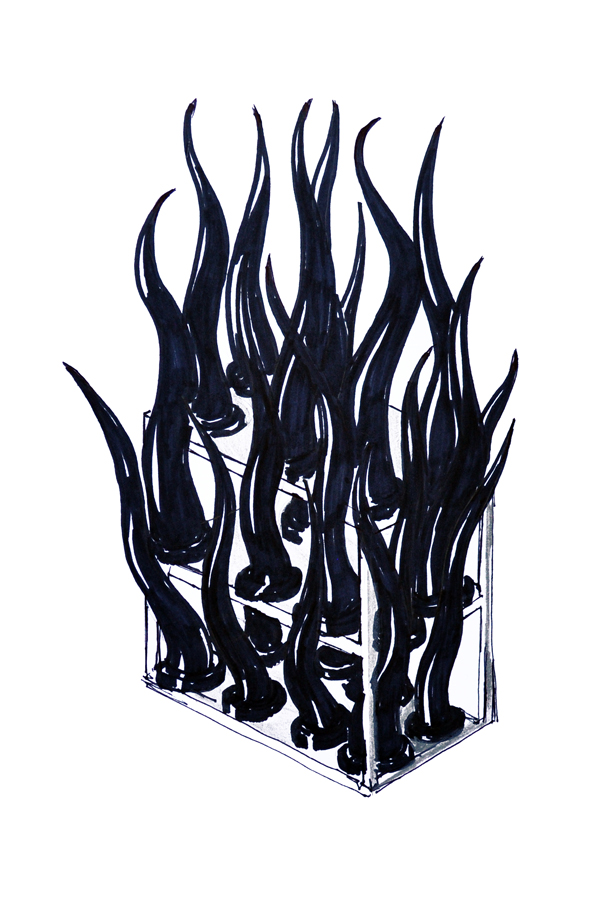
Born out of the drawingbuilding.org online archive, Architectural Inventions presents a stunning visual study of impossible or speculative structures that exist only on paper. Soliciting the work of architects, designers, and artists of renown –as well as emerging talents from all over the world –Maximilian Goldfarb and Matt Bua have gathered an array of works that convey architectural alternatives, through products, expansions, or critiques of our inhabited environments.
From abstract and conceptual visual interpretations of structures to more traditional architectural renderings, the featured work is divided into thematic chapters, ranging from 'Adapt/Reuse' to 'Clandestine'' 'Mobile'' 'Radical Lifestyle', 'Techno-Sustainable', and 'Worship'. Along with arresting and awe-inspiring illustrated content, every chapter also features an essay exploring its respective themes.
Highlighting visions that exist outside of established channels of production and conventions of design, Architectural Inventions showcases a wide scope in concept and vision, fantasy and innovation. Quarterbinding
600 illustrations
336 pages 280 x 216 mm
ISBN 9781780670058
Published October 2012

 
  • «
  •  Start 
  •  Prev 
  •  1 
  •  2 
  •  3 
  •  4 
  •  5 
  •  6 
  •  7 
  •  8 
  •  9 
  •  10 
  •  Next 
  •  End 
  • »


Page 1 of 10